Basement Moisture in Mississauga: Causes, Warning Signs & Solutions
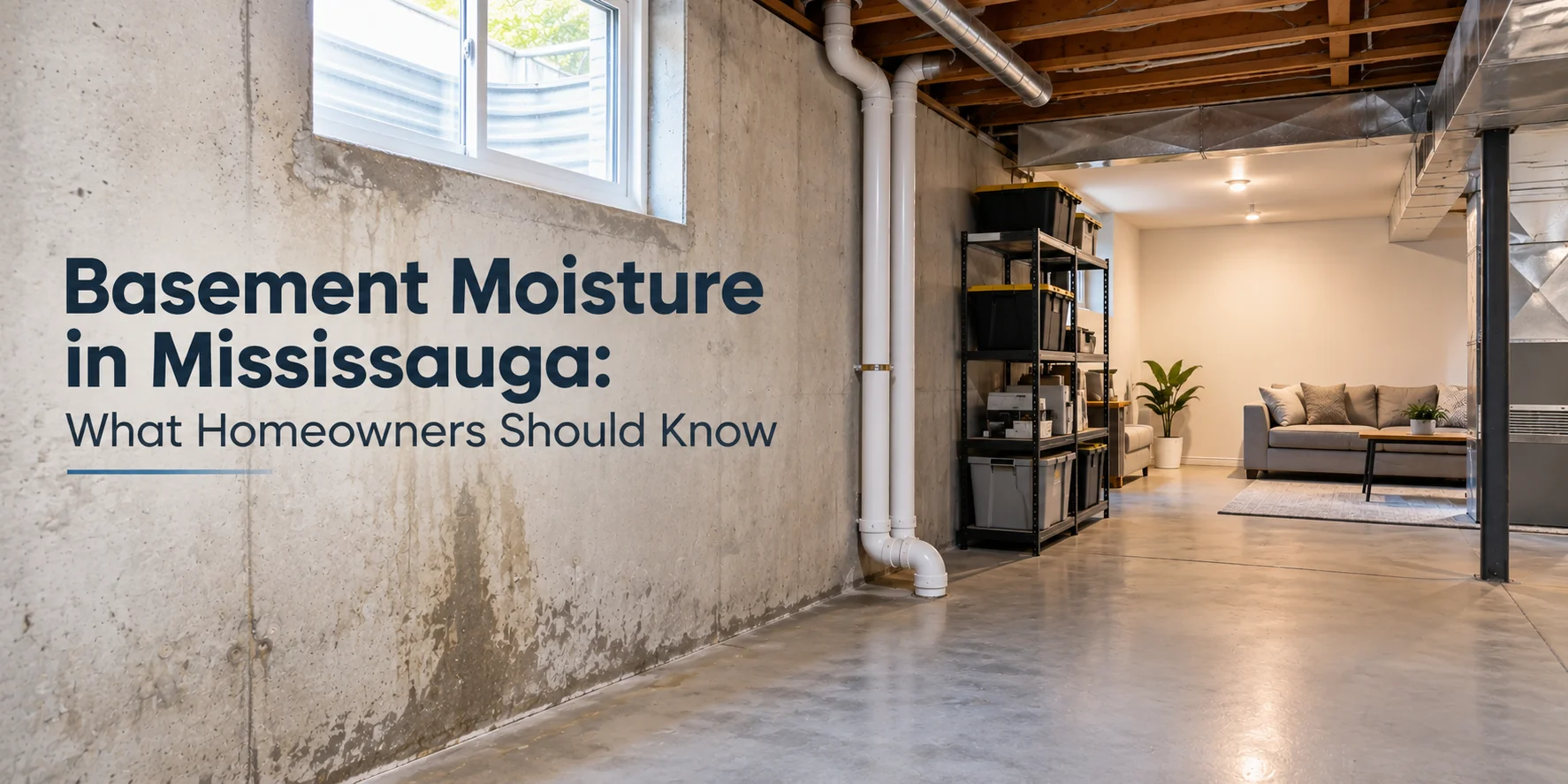
A damp basement is a common concern for homeowners, particularly in older homes where foundations, drainage systems, exterior grading, windows, waterproofing, plumbing, and ventilation may have been installed decades ago. A Mississauga home inspection can often reveal moisture-related issues that may have been developing long before they become obvious.
Basement moisture does not always mean there is a major foundation problem. Water and moisture can enter a basement for many different reasons, including exterior drainage issues, foundation cracks, plumbing leaks, high indoor humidity, condensation, or a combination of several conditions.
The first step toward solving the problem is identifying where the moisture is coming from. A dehumidifier, for example, can help control humidity, but it cannot correct a downspout that is discharging water beside the foundation. Similarly, improving exterior grading may redirect rainwater but will not repair a leaking plumbing connection.
For homeowners, understanding the source of basement moisture is essential before deciding on a solution.
Why Basement Moisture Can Be More Noticeable in Summer
Many homeowners in notice that their basement feels wetter during the summer months. This is not necessarily because there has been more rain.
Warm outdoor air can hold a significant amount of water vapour. When that warm, humid air enters a cooler basement, moisture can condense on cooler surfaces such as foundation walls, floors, pipes, and other building materials.
Summer rainfall can also put additional pressure on a home’s exterior drainage system. During a heavy rainfall event, gutters, downspouts, grading, window wells, and the soil around the foundation all affect where water goes.
If water is directed toward the house rather than away from it, the foundation may be exposed to increased moisture and hydrostatic pressure.
This means basement moisture should be considered from two perspectives: water management and indoor humidity/condensation. Determining when and where the moisture appears can help identify its likely source.
Where Can Water or Moisture Enter a Basement?
During a home inspection in Mississauga, several areas should be considered when investigating basement moisture. Some conditions allow liquid water to enter directly, while others increase moisture around or inside the basement.
1. Foundation Cracks
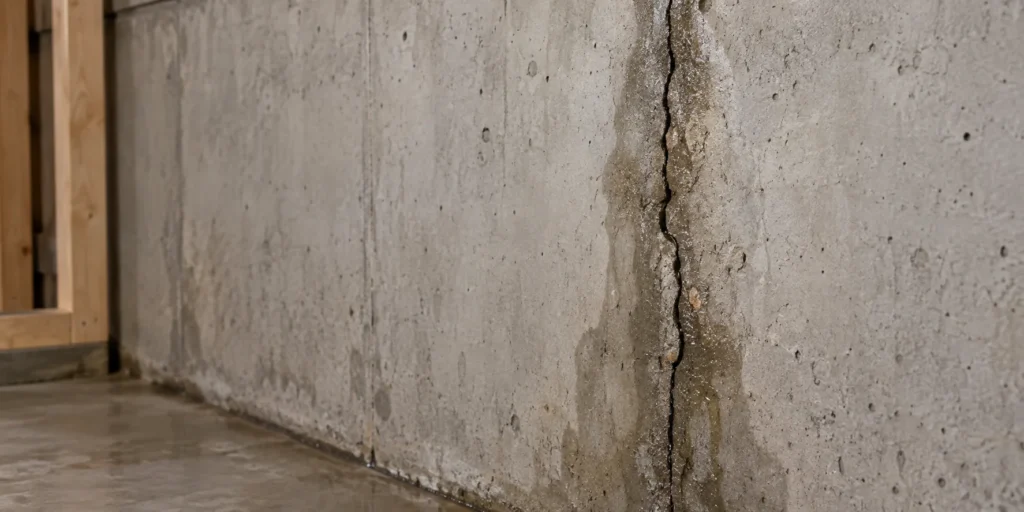
Concrete and masonry foundations can develop cracks because of settlement, shrinkage, movement, age, or other conditions.
Not every foundation crack will leak. However, cracks showing staining, dampness, efflorescence, or active seepage deserve attention.
If a crack is allowing water into the basement, determining its location, condition, and behaviour can help identify the appropriate next step.
2. Poor Exterior Grading
The ground around a home’s foundation should generally direct surface water away from the building.
Over time, soil can settle and create depressions beside the foundation. These low areas may allow rainwater to collect against the foundation wall, increasing the possibility of water entry.
Proper exterior grading is therefore an important part of basement water management.
3. Downspouts Discharging Too Close to the Foundation
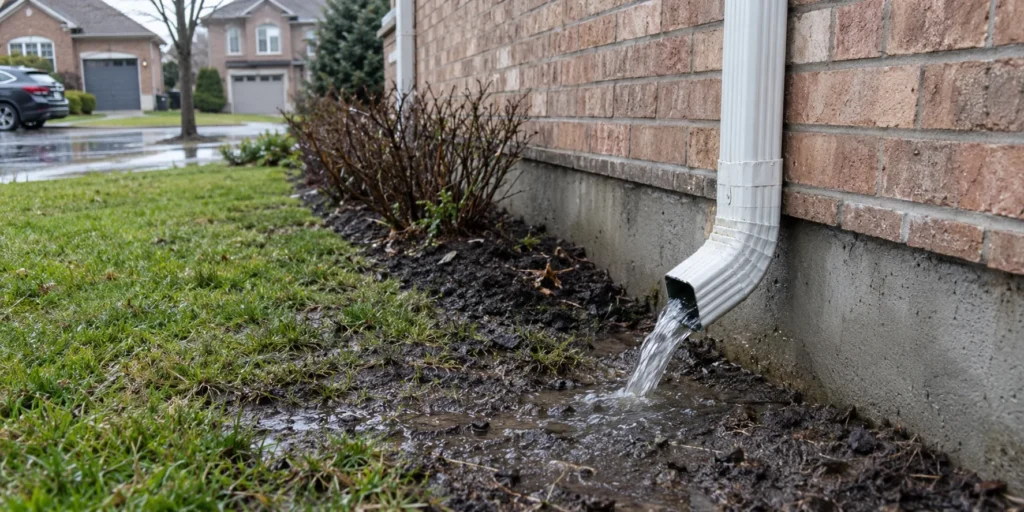
A roof can collect a large amount of water during a storm. If downspouts release that water directly beside the foundation, the surrounding soil can become saturated.
Downspout extensions can be helpful when they safely direct roof water away from the building.
Checking where downspouts discharge should be part of any investigation into recurring basement moisture.
4. Gutters and Roof Drainage
Basement moisture problems are not always caused by something located inside the basement.
Blocked, overflowing, or poorly directed gutters can release significant amounts of water beside the foundation.
For this reason, a basement moisture investigation should consider the home’s roof drainage system as well as the foundation itself.
5. Window Wells and Basement Windows
Basement windows are located low on exterior walls and can be vulnerable to water accumulation.
Poorly drained or clogged window wells, improper grading, or inadequate drainage provisions can allow water to collect around basement windows.
Water staining around a basement window should not simply be treated as a cosmetic problem. It may indicate an underlying moisture issue.
6. Floor-Wall Joints and Foundation Penetrations
Water can sometimes appear where the basement floor meets the foundation wall.
Foundation penetrations for plumbing, electrical services, or other utilities can also provide pathways for water under certain site and groundwater conditions.
The location and pattern of moisture can provide useful clues about where water may be entering.
7. Sump Pump and Drainage Problems
Where a sump system is installed, it is intended to help control groundwater.
A sump pump that does not operate properly, has a blocked discharge, or discharges water in an inadequate location can leave a basement vulnerable during wet conditions.
Homeowners should periodically check that the sump system is operating and that its discharge route is functional.
8. Plumbing and Mechanical Sources
Not all basement water comes from outside the house.
Leaking supply lines, drains, water heaters, HVAC components, laundry connections, and other plumbing or mechanical equipment can introduce water into a basement.
The location and pattern of staining can help distinguish an interior plumbing or mechanical leak from exterior water entry.
9. Indoor Humidity and Condensation
Sometimes there is no active water leak at all.
High indoor relative humidity can cause condensation on cold surfaces and make a basement feel damp even when the foundation itself is not leaking.
This can be particularly noticeable during the summer when warm, humid outdoor air enters a cooler basement.
What Can Basement Moisture Lead To?
Basement moisture is more than a comfort issue. Persistent moisture can affect indoor air quality, finishes, building materials, and the long-term condition of the basement environment.
High Relative Humidity
A commonly used target for indoor relative humidity is roughly 30–50%, depending on the season and building conditions.
Sustained humidity above about 60% increases the risk of condensation and creates more favourable conditions for mould growth, especially where surfaces are cool or damp.
A hygrometer can help homeowners monitor indoor humidity rather than relying only on how the basement feels.
Mould and Microbial Growth
Mould requires moisture, a suitable surface, and time.
When moisture conditions persist, mould can develop on materials such as drywall, wood products, paper-faced materials, stored belongings, and some insulation.
Visible mould should be assessed and addressed rather than simply painted over.
Musty Odours
A persistent musty smell can be an important indication that moisture is present somewhere in the basement.
There may not always be visible standing water. Odours can sometimes point to moisture conditions that are less obvious during a quick visual inspection.
Efflorescence and Water Staining
White, powdery deposits on masonry are known as efflorescence. They can indicate that moisture has moved through the material and left mineral deposits behind.
Water stains, peeling finishes, and damp materials can provide additional clues about previous or ongoing moisture exposure.
Damage to Finishes
Repeated exposure to moisture can contribute to deterioration of drywall, baseboards, flooring, cabinetry, and other finished materials.
Installing new finishes over a damp wall without correcting the source can hide the underlying issue rather than solve it.
Wood Deterioration
Persistent moisture around wood components can contribute to deterioration and create conditions favourable to wood-destroying organisms.
The level of risk depends on factors such as moisture level, duration, and the materials involved.
Reduced Comfort
A damp basement can feel colder and less comfortable.
Excessive humidity can also make the home more difficult to condition, affecting overall indoor comfort.
Practical Ways to Control Basement Moisture
The most effective moisture-management strategy is generally to identify and control the source first.
A dehumidifier can be useful, but it should be viewed as one part of a larger moisture-management plan rather than the only solution.
1. Keep Surface Water Away From the Foundation
Check the grading around the home and look for areas where water collects beside the foundation.
Roof water should be captured and directed to appropriate discharge locations. Where appropriate, downspout extensions can help direct water away from the building.
2. Address Foundation Cracks Showing Moisture
If a foundation crack is actively leaking or shows evidence of water entry, it should be evaluated by an appropriate qualified contractor.
The appropriate repair method depends on the type and location of the crack, its behaviour, and surrounding conditions.
3. Keep the Sump System Operational
If the home has a sump pump as part of its drainage system, test it periodically.
Make sure the discharge route is functional and does not simply return water against the foundation.
4. Use a Dehumidifier to Control Indoor Humidity
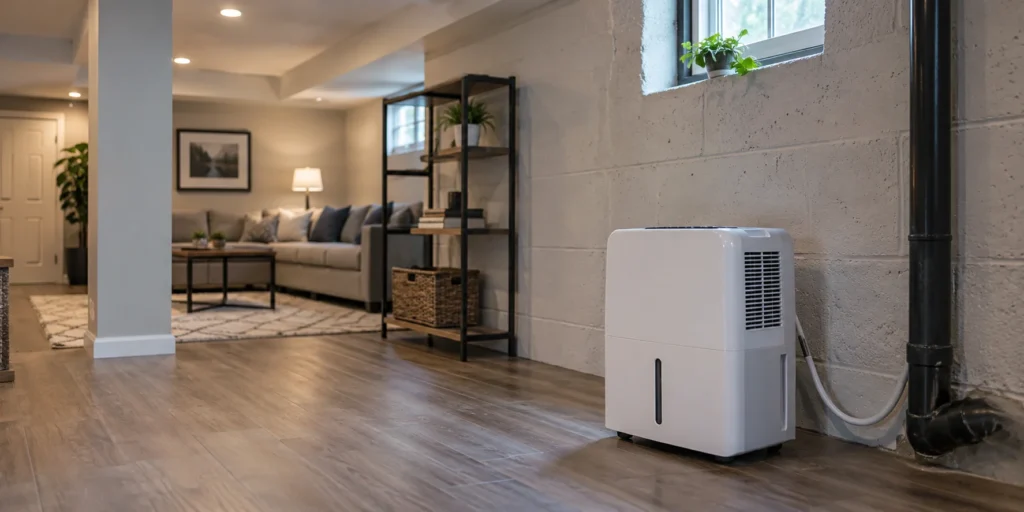
A basement dehumidifier can be particularly useful for managing summer humidity.
Where available, use the humidity setting rather than relying only on occasional operation.
A reliable hygrometer can also help homeowners determine whether indoor humidity is actually under control.
5. Be Careful With Opening Basement Windows in Summer
Opening basement windows may seem like a good way to improve ventilation. However, during humid weather, it can introduce additional water vapour into the basement.
When warm, humid outdoor air enters a cooler basement, condensation can increase.
Homeowners should consider outdoor conditions, indoor humidity readings, and the home’s mechanical ventilation or air-conditioning strategy when deciding when ventilation is beneficial.
6. Maintain a Reasonable Indoor Temperature
Allowing a basement to become excessively cold during humid weather can contribute to condensation.
Keeping the space reasonably conditioned can reduce the temperature difference between humid air and cold surfaces and may help reduce condensation.
7. Maintain Bathroom and Kitchen Exhaust Ventilation
Showers, cooking, and other household activities generate moisture.
Bathroom and kitchen exhaust fans should discharge to the exterior and should be kept clean and functional.
The goal is to remove moisture at its source rather than allowing it to migrate through the home.
8. Do Not Cover an Unresolved Moisture Problem
Before installing new drywall, flooring, insulation, or other finishes over a damp area, determine why the area is wet.
Finishing over an unresolved moisture problem can trap moisture and make future repairs more difficult.
Basement Moisture Checklist for Homeowners
Between professional inspections, homeowners can perform a basic visual check of the basement.
Look for:
- Damp or discoloured foundation areas
- White mineral deposits or efflorescence
- Persistent musty odours
- Peeling paint or damaged drywall
- Foundation cracks showing staining or seepage
- Downspouts discharging beside the foundation
- Negative or settled grading beside the house
- Standing water in window wells
- A sump pump that does not operate or discharge correctly
- Water stains around plumbing and mechanical equipment
- Condensation on cold pipes or surfaces
- Indoor relative humidity consistently above about 60%
- Stored items or cardboard showing signs of dampness
These observations can help homeowners identify potential warning signs, but they do not necessarily determine the exact source of moisture.
When Should You Call a Professional?
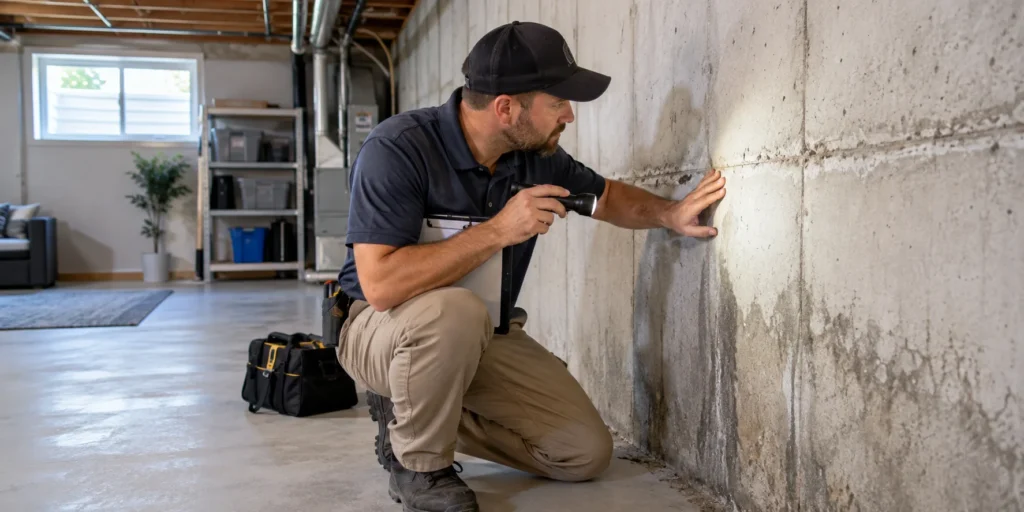
A professional Mississauga home inspection can help identify moisture patterns that may be easy to overlook during a quick homeowner walk-through.
A professional assessment is particularly worthwhile when:
- Basement moisture keeps returning
- There is active water seepage
- A foundation crack is wet
- Mould-like growth is present
- The sump system is not functioning properly
- The source of the moisture is unclear
The goal of an inspection is not simply to determine that “the basement is wet.”
A useful assessment should consider the location, pattern, severity, and likely source of the moisture and help determine an appropriate next step.
Depending on what is observed, specialized evaluation by a qualified foundation contractor, plumber, drainage contractor, HVAC professional, or mould/remediation specialist may be appropriate.
Final Takeaway
Basement moisture is common, particularly in older homes, but common does not mean it should be ignored.
The key is to understand whether the moisture is coming from surface water, groundwater, a foundation pathway, plumbing, indoor humidity, condensation, or a combination of conditions.
For homeowners, the most important principles are simple:
Keep water away from the foundation, keep drainage systems working, control indoor humidity, and investigate recurring moisture instead of covering it up.
A dry basement is not created by one product or one repair. It is the result of effective exterior drainage, sound building components, and sensible indoor moisture control.
ShieldPoint Home Inspection provides detailed Mississauga home inspection for homeowners and buyers across the GTA, including Mississauga and surrounding communities. A professional inspection can help identify moisture-related concerns before they become larger repair projects.