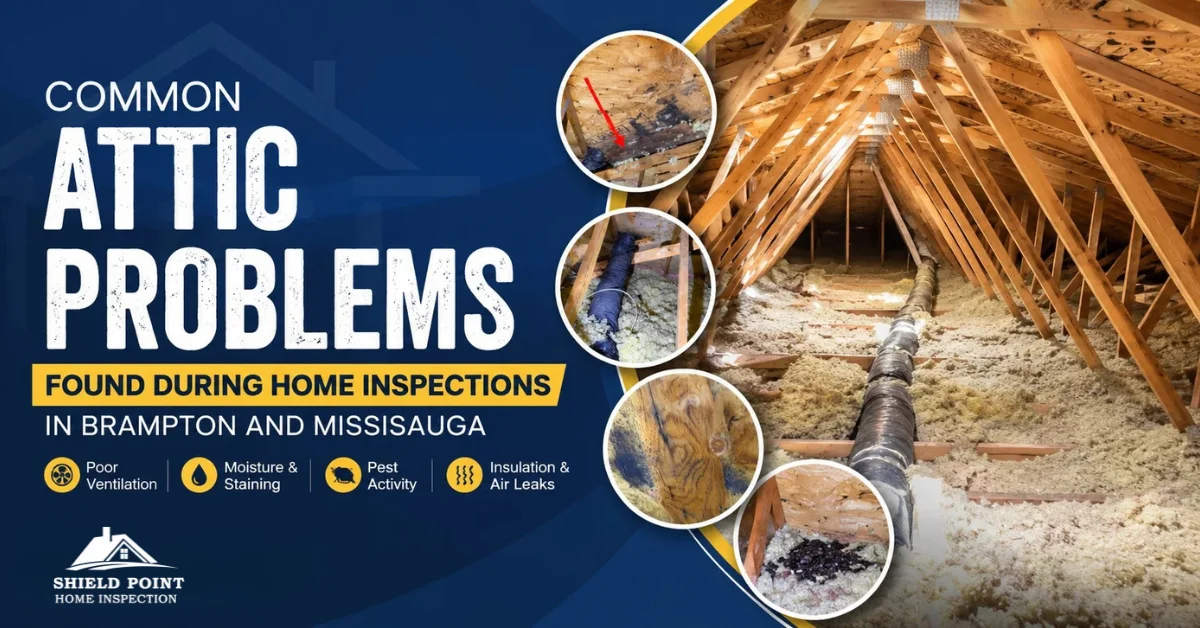
When buying a home, most buyers pay close attention to the kitchen, bathrooms, flooring, windows, basement and overall appearance of the property. But one area that often gets overlooked during a showing is the attic.
The attic is usually not accessible to buyers during a regular showing, and many attic problems cannot be identified simply by looking at the living spaces below. During home inspections in Brampton and Mississauga, several recurring attic-related issues can be found that buyers should be aware of before making a purchase decision.
While a home inspection provides a much more detailed assessment, there are a few warning signs that first-time buyers should understand.
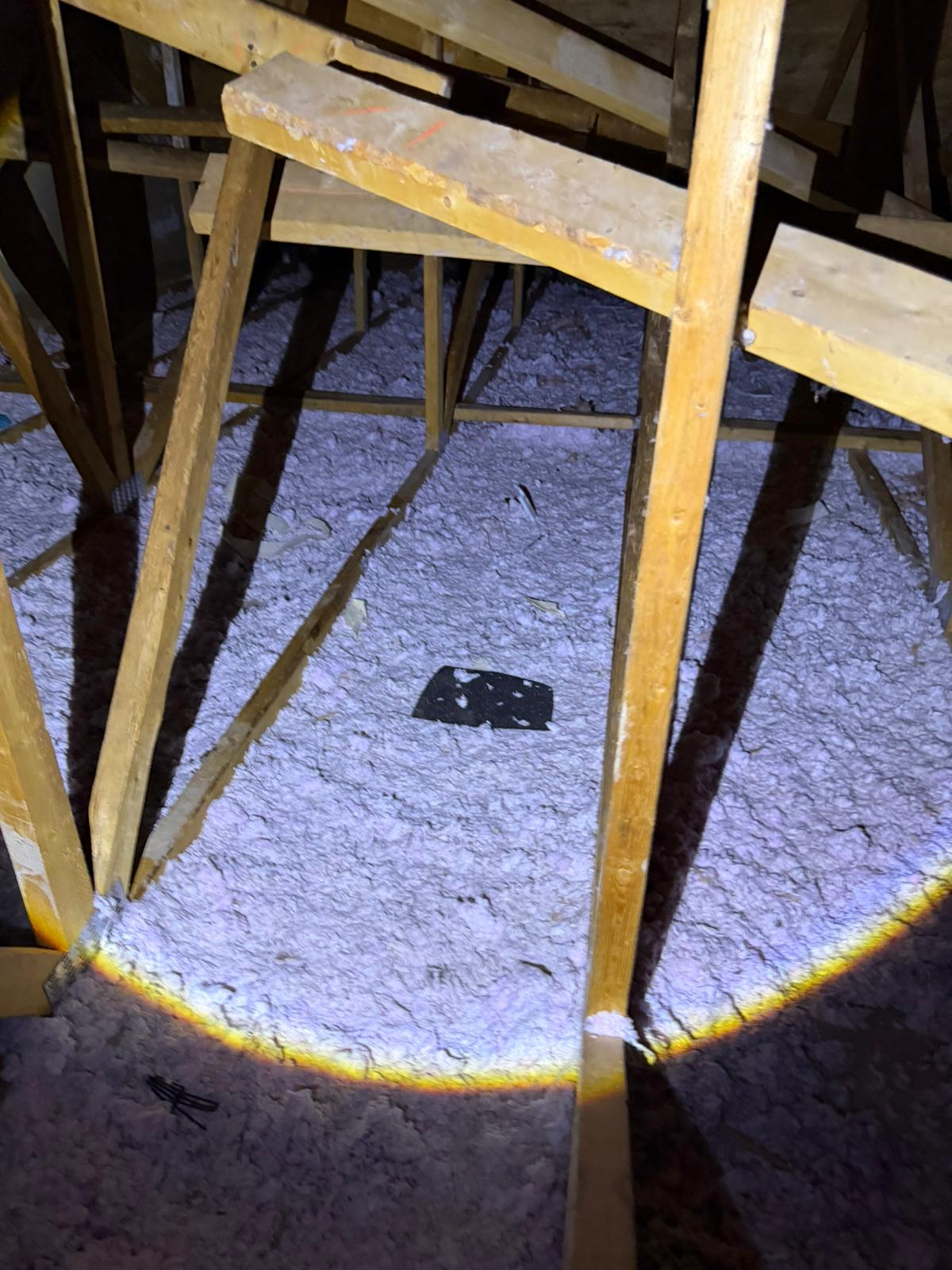
1. Attic Ventilation Problems
Proper attic ventilation is one of the most important factors in maintaining a healthy attic.
Warm, moisture-laden air from the home can enter the attic through openings around bathroom fans, plumbing penetrations, electrical fixtures, attic hatches and other areas. If that moisture cannot properly escape to the exterior, it can contribute to condensation, staining, deterioration and microbial growth.
Common attic ventilation concerns include:
- Roof ventilation is inadequate or improperly configured.
- Ventilation openings are blocked or restricted.
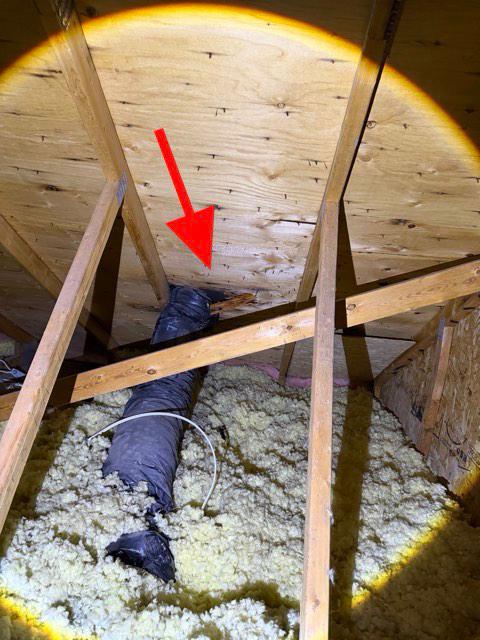
- Bathroom exhaust fans discharge into the attic instead of outside.
- Moisture-laden air is entering the attic.
- Attic ventilation is not properly connected to the exterior.
- Air leakage is occurring around penetrations and openings.
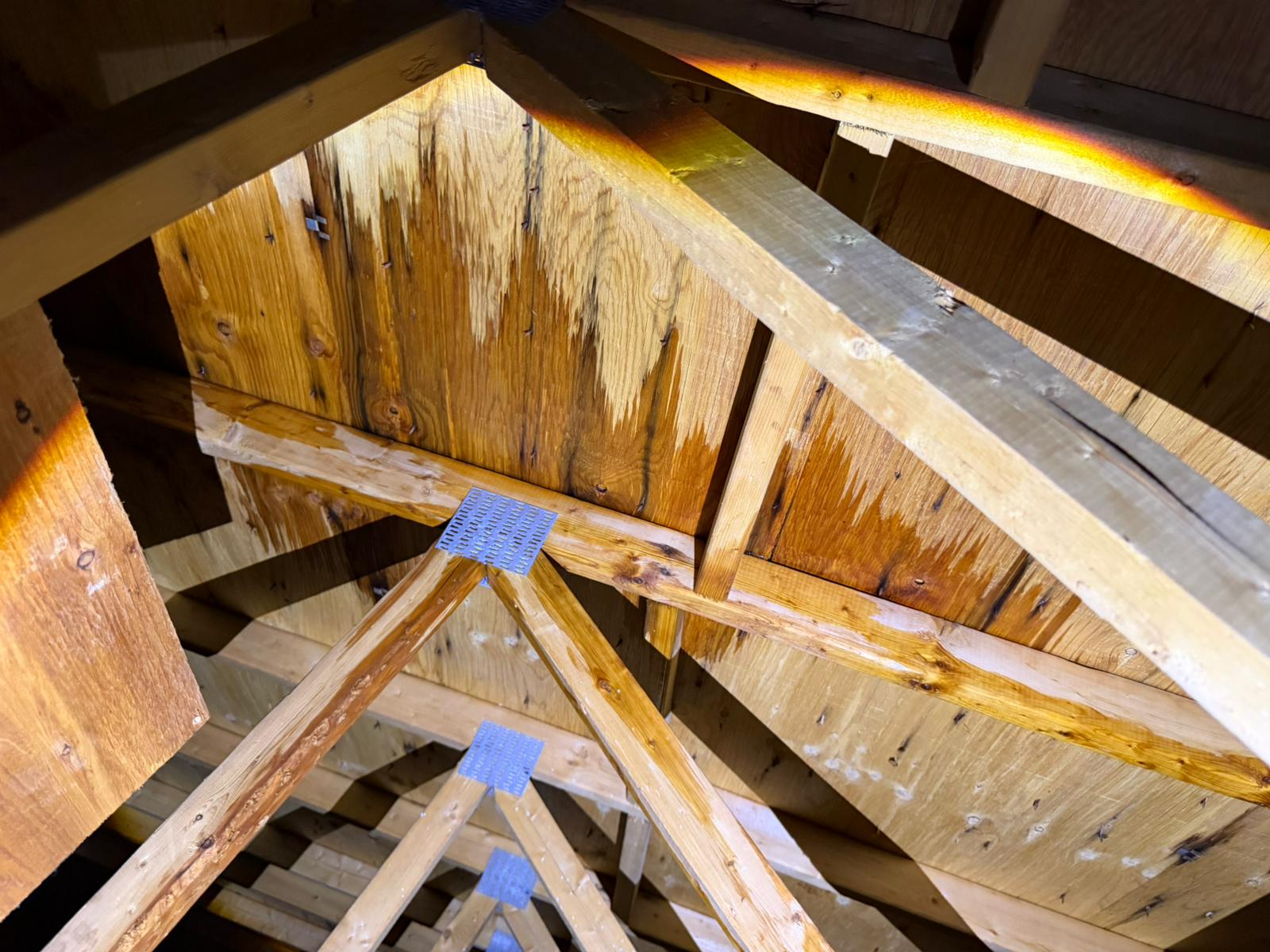
2. Staining or Possible Mold Growth on Roof Sheathing
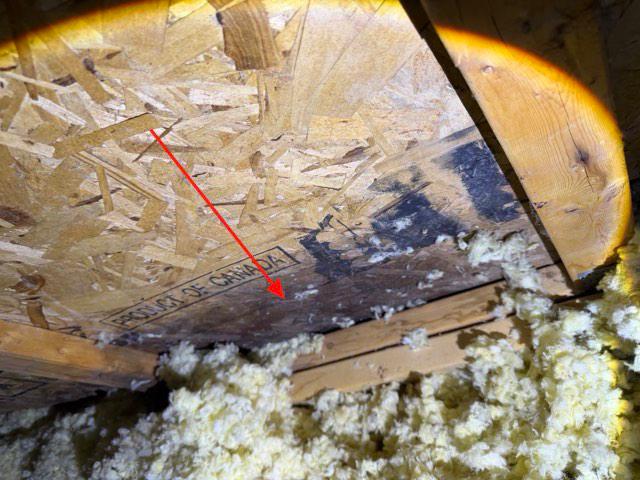
One of the concerns that may be found during an attic inspection is dark staining or suspected microbial growth on the roof sheathing.
This can be associated with prolonged moisture or condensation, although staining alone does not always indicate an active problem.
Homebuyers should pay attention to:
- Ceiling stains, particularly on upper floors.
- Evidence of previous leaks or repairs.
- Unexplained staining that should be professionally evaluated.
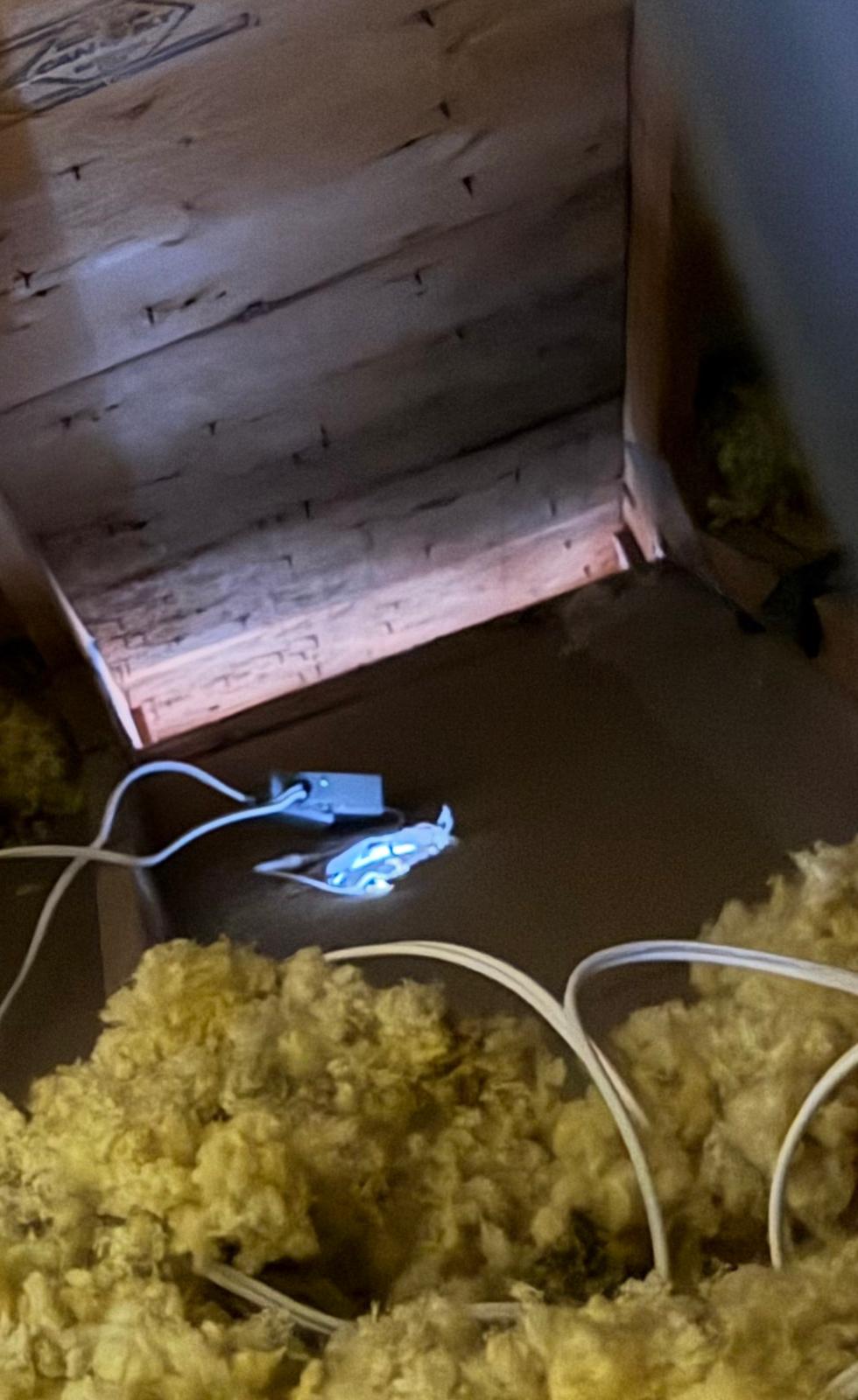
3. Bathroom Fans Discharging Into the Attic
Bathroom exhaust fans are designed to remove warm, humid air from the home. That air should be discharged outside the building, not into the attic.
When a bathroom fan terminates in the attic, moisture can accumulate on cold surfaces and contribute to condensation, staining and deterioration of roof sheathing and insulation.
4. Insulation Problems
During inspections, insulation may be found compressed, unevenly distributed, missing in certain areas, disturbed around repairs, installed in a way that restricts ventilation, or affected by moisture or pest activity.
Simply seeing a large amount of insulation does not necessarily mean the attic is properly insulated.
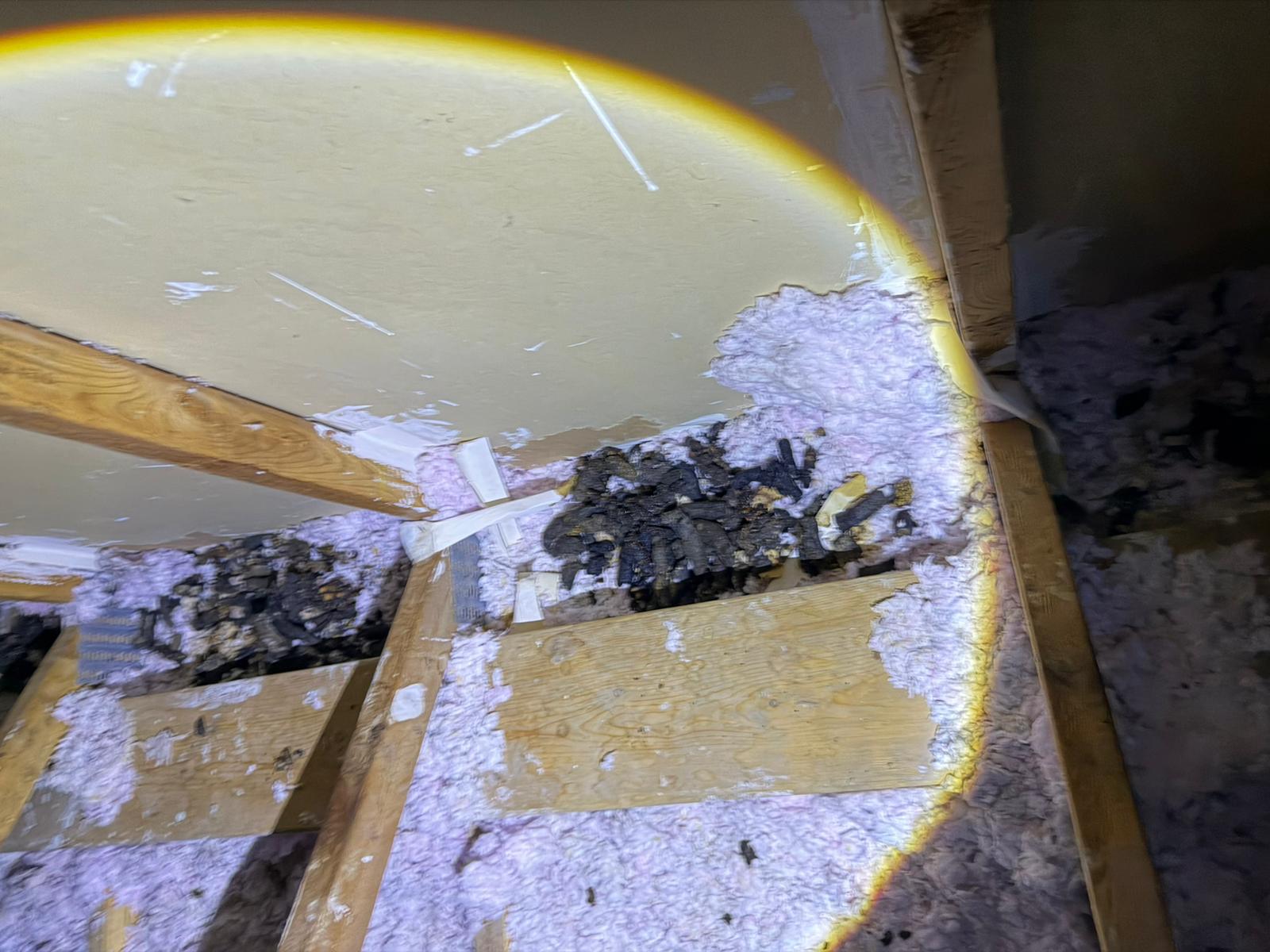
5. Pest Activity in the Attic
Attics can provide an attractive environment for pests. Evidence may include droppings, nesting material, damaged insulation, gnaw marks or other signs of entry.
It is also important to determine how pests entered the attic in the first place. Removing the pest without addressing the entry point may not solve the underlying problem.
6. Visible Light and Openings
During an attic inspection, visible daylight can sometimes be observed around roof penetrations, vents or other openings.
Not every instance of visible light automatically means there is a defect. However, unexplained openings or gaps should be investigated because they can potentially allow water, air or pests to enter.
What Can a First-Time Buyer Look for During a Showing?
You may not be able to access the attic during a regular showing, but you can still look for warning signs.
- Ceiling stains: Look for yellow, brown or dark discoloration, especially on upper floors.
- Musty or unusual odors: A persistent musty smell may justify asking additional questions.
- Bathroom ventilation: Check whether bathroom fans operate and ask where they discharge.
- Signs of previous repairs: Ask about freshly painted or repaired ceiling areas if they appear related to a previous leak or stain.
- Exterior roof ventilation: From outside, look for roof ventilation components and ask questions if ventilation appears limited.
Why Attic Ventilation Matters
Think of the attic as part of the home’s overall building system. The objective is not simply to have insulation in the attic. The attic also needs appropriate ventilation and air control.
Moisture generated inside the home should not be allowed to accumulate in the attic. Unwanted openings should be properly addressed, and ventilation should discharge to the exterior where designed to do so.
Don’t Judge an Attic by What You Can See From the Living Space
One of the biggest lessons for first-time buyers is that a clean and modern-looking interior does not necessarily mean the hidden areas of the home are problem-free.
A freshly renovated kitchen, new flooring and updated bathrooms can make a property look excellent during a showing, while attic ventilation, insulation, roof sheathing and pest activity may require a closer inspection.
Buying a Home in Brampton or Mississauga?
Attic conditions are just one part of a complete home inspection. At ShieldPoint Home Inspection, we assess accessible areas of the home and look for conditions that may not be obvious during a regular property showing.
For buyers in Brampton, Mississauga, Caledon, Milton and the surrounding GTA, understanding these hidden conditions before completing a purchase can help you make a more informed decision.
If you are considering a home, don’t just look at what is visible—look at what could be happening behind the walls and above the ceiling.
Buyer Showing Checklist
Before making a home purchase, consider asking about the following:
- Ceiling stains: Look for yellow, brown or dark discoloration, especially on upper floors.
- Musty or unusual odors: A persistent musty smell may justify asking additional questions.
- Bathroom ventilation: Check whether bathroom fans operate and ask where they discharge.
- Signs of previous repairs: Ask about freshly painted or repaired ceiling areas if they appear related to a previous leak or stain.
- Exterior roof ventilation: From outside, look for roof ventilation components and ask questions if ventilation appears limited.